en
 English
Power generation systems operate under some of the harshest industrial conditions in the world. High-pressure steam, elevated temperatures, and continuous operation demand highly reliable pipeline control equipment. Among the most important components used in thermal power plants, nuclear facilities, and industrial boiler systems is the power station gate valve.
As a professional gate valve manufacturer, Gangye Valve provides high-performance power station gate valves engineered for demanding industrial applications. These valves are designed to deliver reliable shut-off performance, long service life, and operational safety in high-temperature and high-pressure environments.
In this guide, we will explore the technology behind power station gate valves, their working principles, materials, applications, advantages, and why they remain essential in modern power generation systems.
Power station gate valves play a vital role in regulating and controlling the flow of fluids within power generation systems. These valves are widely used in steam pipelines, boiler feedwater systems, cooling systems, and other high-pressure industrial applications. Their primary function is to isolate sections of pipelines, allowing maintenance, inspection, or repairs to be performed without shutting down the entire power plant.
As a critical component in power generation infrastructure, selecting a reliable gate valve manufacturer is essential for ensuring operational safety, system stability, and long-term equipment performance. High-quality gate valves help reduce leakage risks, improve flow control efficiency, and support continuous plant operation.
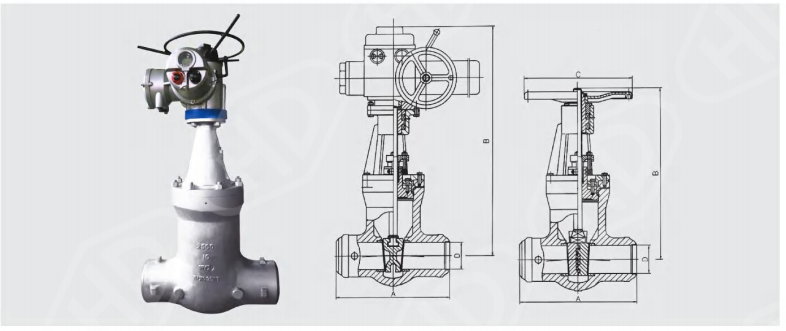
Power station gate valves operate using a linear motion mechanism.
Inside the valve body is a gate or wedge-shaped disc connected to a stem. When the handwheel, gearbox, or actuator rotates, the stem moves the gate vertically.
When fully open:
The gate retracts completely into the valve bonnet
Fluid flows with minimal resistance
Pressure drop remains low
High flow efficiency is maintained
When closed:
The gate seals tightly against the valve seats
Fluid flow is completely blocked
Leakage is minimized
System isolation is achieved safely
This simple yet highly effective operating principle makes gate valves ideal for high-pressure steam systems.
The valve body is the pressure-containing shell of the valve. It must withstand extreme thermal stress, vibration, and pressure fluctuations.
Common materials include:
WC6
WC9
C12A
Stainless steel
Chrome molybdenum alloy steel
These materials provide excellent resistance to creep, oxidation, and thermal fatigue.
The gate disc provides shut-off functionality.
Modern power station gate valves often use:
Flexible wedge gates
Parallel slide gates
Pressure seal gate designs
These designs improve sealing reliability under fluctuating thermal conditions.
The stem transfers mechanical force from the actuator to the gate.
Forged stainless steel stems are commonly used because they offer:
High tensile strength
Corrosion resistance
Long fatigue life
The bonnet encloses the moving stem assembly and helps maintain pressure containment.
Power station valves frequently use pressure seal bonnets because they provide superior sealing performance under high-pressure service conditions.
Selecting the right material is critical in high-temperature power systems.
| Material | Temperature Resistance | Common Application |
| WC6 | Up to 540°C | Steam pipelines |
| WC9 | Up to 593°C | Superheated steam systems |
| C12A | High creep resistance | Ultra-supercritical power plants |
| Stainless Steel | Excellent corrosion resistance | Water and condensate systems |
| Chrome-Moly Alloy Steel | High-pressure steam service | Thermal power generation |
These specialized materials help extend valve lifespan and reduce maintenance frequency.
Modern valve technology has evolved significantly over the last decade.
Manufacturers now use hard-faced sealing surfaces with Stellite overlays to improve wear resistance and reduce leakage.
High-precision machining improves sealing surface accuracy and valve reliability.
Some advanced systems now integrate:
Temperature monitoring
Pressure sensors
Predictive maintenance systems
Smart actuators
These technologies support Industry 4.0 and intelligent power plant operations.
Modern packing systems help reduce fugitive emissions and improve environmental compliance.
Power station gate valves offer several advantages that make them ideal for power generation applications. Firstly, their ability to isolate sections of pipelines without interrupting the entire system minimizes downtime during maintenance and repairs. This aspect is particularly crucial in power stations where uninterrupted electricity supply is of utmost importance.
These valves also offer excellent sealing properties when closed, ensuring no leaks or unwanted fluid escape. This characteristic is invaluable in power stations where the reliability and safety of the equipment are paramount. Furthermore, their robust construction and materials contribute to their durability and longevity, resulting in reduced maintenance and replacement costs.
1. What is a power station gate valve used for?
A power station gate valve is used to isolate or completely shut off fluid flow in high-pressure and high-temperature power generation systems.
2. Why are gate valves preferred in steam systems?
Gate valves provide full-port flow with minimal pressure drop and excellent sealing performance, making them ideal for steam applications.
3. What materials are commonly used in power station gate valves?
Common materials include WC6, WC9, stainless steel, and chrome-moly alloy steel for high-temperature resistance.
4. What pressure ratings are available for power station gate valves?
Most power station gate valves are available in Class 600, 900, 1500, and 2500 pressure ratings.
5. How long do power station gate valves last?
With proper installation and maintenance, high-quality power station gate valves can operate reliably for many years under demanding industrial conditions.
6. How do I choose a reliable gate valve manufacturer?
Choose manufacturers with strong engineering capabilities, international certifications, material traceability systems, and experience in power generation applications.
Power station gate valves are indispensable components in modern power generation systems. Their ability to withstand extreme pressure and temperature conditions while delivering reliable isolation performance makes them essential for safe and efficient plant operations.
As power plants continue evolving toward higher efficiency and smarter infrastructure, valve technology also continues to advance through improved materials, precision engineering, and intelligent monitoring systems.
Choosing a trusted gate valve manufacturer is one of the most important decisions for ensuring long-term operational reliability and plant safety.
Gangye Valve remains committed to delivering durable, high-performance power station gate valves designed for the demanding needs of global energy industries.